The ₹1 Trial That 100+ Apps Copied
A ₹1 pricing decision changed how 100+ Indian apps sell subscriptions. The story of building UPI Autopay and TNPL at STAGE, and what we learned about trust, perception, and talking to users.
A ₹1 pricing decision changed how 100+ Indian apps sell subscriptions. Within six months, B2C apps didn't just copy our flow, they literally pasted it.
I used to work at STAGE, an OTT platform, where I helped build the ₹1 Trial + UPI Autopay model. Jeff Bezos said AWS was a business miracle because it faced no competition for 7 years. For everything else, competitors showed up within 2 years. We lasted 6 months before many apps copied us.
If you're building for India's Tier 2/3 audience or working on subscription products, this will help you avoid the mistakes we made.
The problem we were solving
Even after the Jio and UPI revolution, we faced two issues: high CAC and high churn. The problem was two-fold, requiring both UPI Autopay and the ₹1 TNPL flow to solve.
The primary insight behind UPI Autopay was to build a predictable business model. It creates a flywheel in OTT: the more active subscribers you have, the more you can increase the content which improves user experience, generates more data, and makes recommendations better.
But UPI Autopay was in its early stage. One issue was dev complexity, the other was trust.
For acquisition, we needed sachet pricing. India isn't a bottle economy, it's a sachet economy.
The numbers back this up: India's sachet market was worth ₹85,000 crore in 2023, growing at 14.75% annually. Around 70-75% of the shampoo market comprises sachets at ₹1 and ₹2. In biscuits, 75% of sales sit in the ₹5 and ₹10 price points. If you go to tier 2 and tier 3 cities, sachets outsell bottles.
Subscription was a new concept to these markets in 2023, so spending elasticity was low. A ₹1 trial worked because it's a commitment, qualifies intent better than ₹0, and the price point feels like a sachet, not a bottle.
The ₹1 that looked like ₹199
Our login-to-trial conversion wasn't moving. I analyzed funnels, got a quantitative understanding, then talked to 500 users.
Talking to remote users is damn difficult. Buses you've never heard of, trust issues, language barriers. But it's worth it. I also travelled to Khandra, Haryana to talk to users in person and get a pulse on the ground. The insights from these conversations were very different from what analytics showed.
One interesting insight: STAGE wasn't just an OTT for users in Haryana and Rajasthan, it was a defining moment for regional culture industries and dialects that suddenly had representation.
But the biggest product issue was simpler and more urgent.
We were offering a ₹1 trial, but when users went to the payment screen, it showed ₹199.
Even though it was technically correct (₹1 now, ₹199 after trial), the perception was wrong. Users thought they might end up paying ₹199 immediately. We sort of all knew this was an issue but didn't know the insane gravity of it. User calls helped uncover it.
Key insight: Perception matters more than technical accuracy.
We worked with the payment gateways to fix this. Now you get a popup that says "You are paying ₹1 only" and the mandate amount is shown on the next screen. This single change significantly improved conversion.
Building trust through overcommunication
A lot of users didn't trust us. They were worried about being charged automatically without realizing it. We solved this through:
Refunds made smooth - No dark patterns, easy cancellation
Overcommunication - WhatsApp messages on trial confirmation saying "You can cancel anytime." Cross-channel reminders 1 day before trial ends and 3 days before subscription ends
Intentional friction - Instead of auto-assigning content based on ads they watched, we introduced a dialect selection screen. This increased friction and impacted a few metrics, but it improved content relevance and trust. Some friction is good if it prevents downstream dissatisfaction.
This might sound against profit maximization, but creating trust and thinking about customers should come first. Once you have a good brand and content, cancellation can be taken care of.
What actually matters
When I was building these flows, I knew the payment advantage wouldn't last 2 years. It lasted less than 6 months. Today, many apps have the same UPI Autopay plus ₹1-7 TNPL.
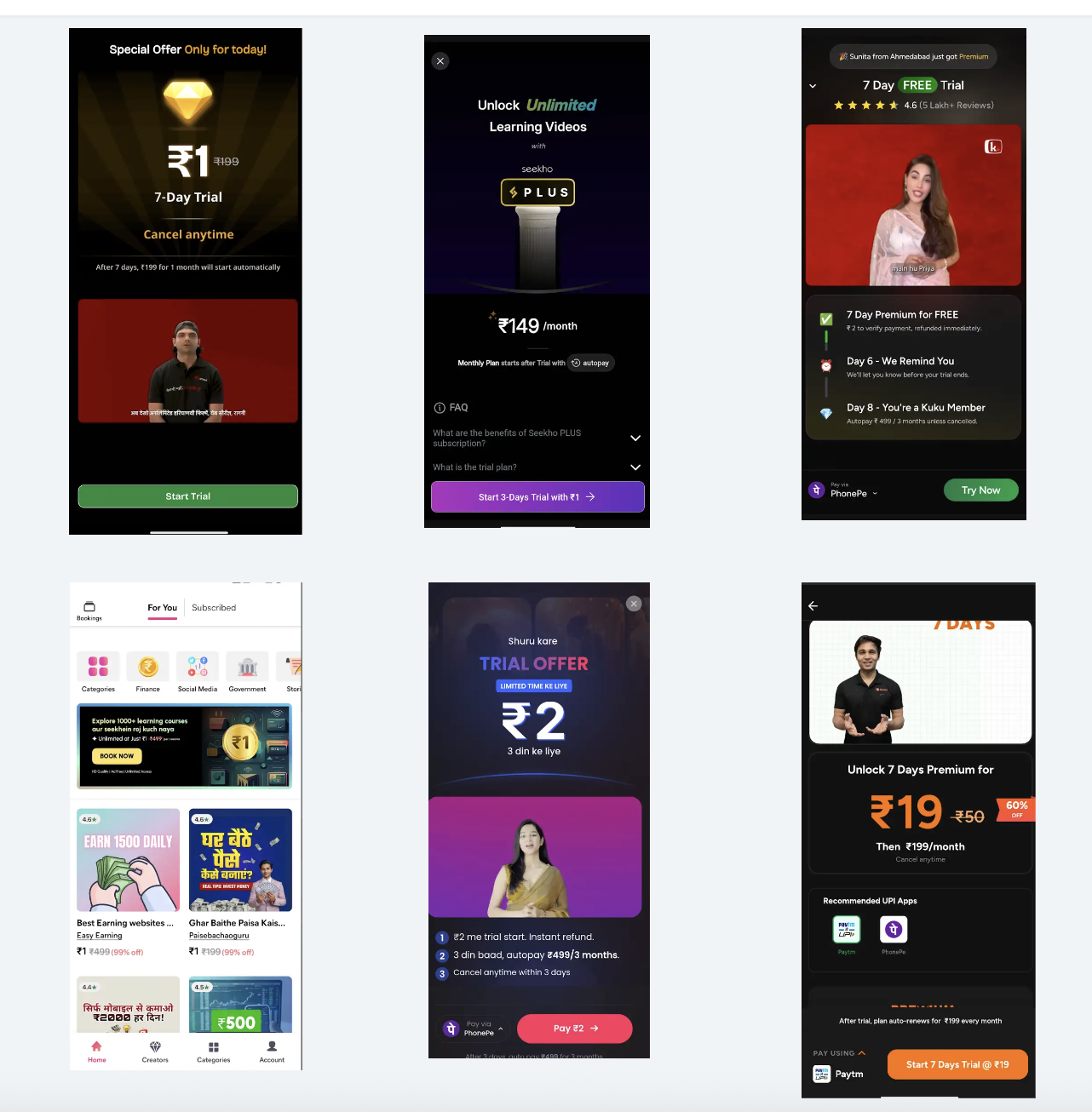 There are many more apps that give ₹1 trial like Univest, TrulyMadly, Master and countless others.
The payment work at STAGE ended up being defining for a lot of apps. Beyond the ₹1 trial, I also worked on optimizing payment gateway retry logic and other critical payment flows. The advantage isn't in the feature, it's in how fast you learn from users and iterate.
If you're building for India, remember: your users will tell you what's broken if you talk to them. Quantitative data shows what's happening, qualitative research shows why. We knew the payment screen was confusing. We didn't know it was killing trust until we heard it from 500 users.
Get out of the building. Talk to users. Fix perception before you fix features.